
Gokyo Valley Trek - Nepal
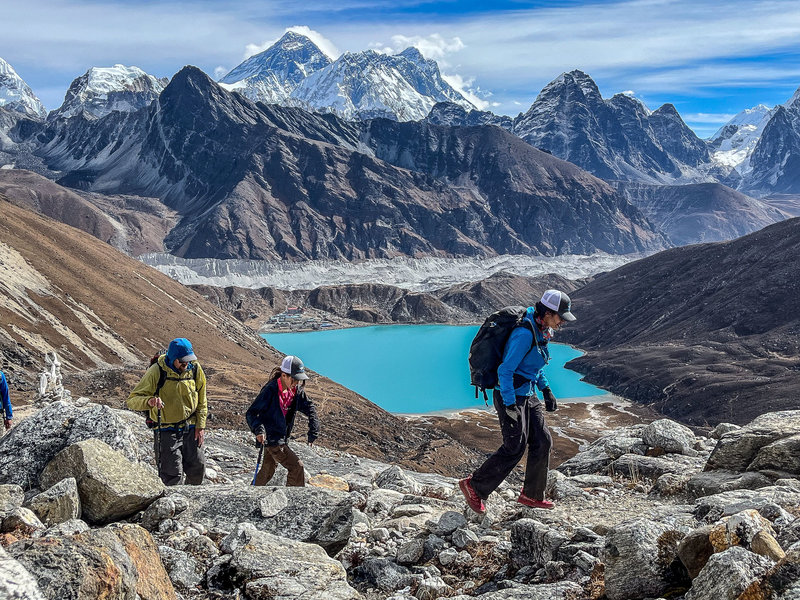
Country: Nepal
Route: Gokyo Valley Trek
Dates:
- October 17 - November 6, 2026
- October 16-November 5, 2027
| Cost: |  |
$6250 USD |
»
Cost Includes - Transfers from and to the airport in Kathmandu and our hotel
- Entry permits to the Sagamartha National Park
- Helicopter flight into Lukla (this adds about $900 to our trip cost per person vs. fixed wing and is included in your price)
- Flight from Lukla to Manthali and transportation in a private vehicle from Manthali to Kathmandu.
- 14 nights/15 days lodging in standard rooms on the trek with 3 meals per day
- Sherpa Guides
- Porters to carry group duffels
- Kathmandu hotel for 4 nights with breakfast
»
Cost Does Not Include - Air flight to/from Kathmandu from your home country.
- Tourist Visa upon arrival in Nepal ($50 USD)
- Lunch and dinner in Kathmandu
- Laundry
- Personal beverages such as soda, or alcohol, bottled water
- Cost of emergency medical care or evacuation in the event of an emergency
- Group tip pool (we encourage each team member to contribute to a tip pool that will be distributed to the local staff upon conclusion of the trip. We also contribute to this pool. $200 each)
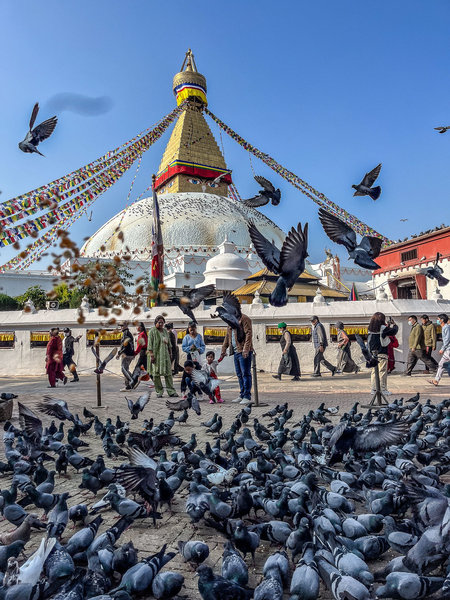
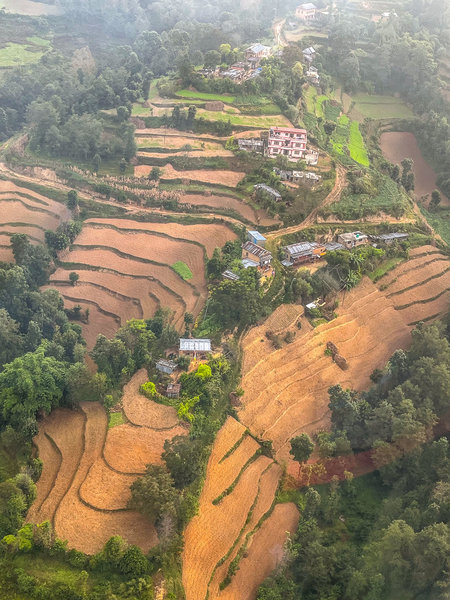
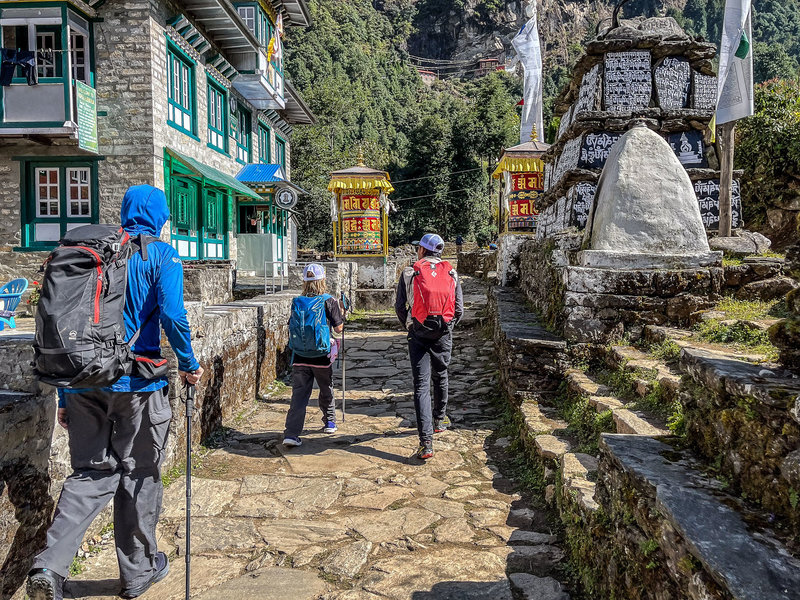
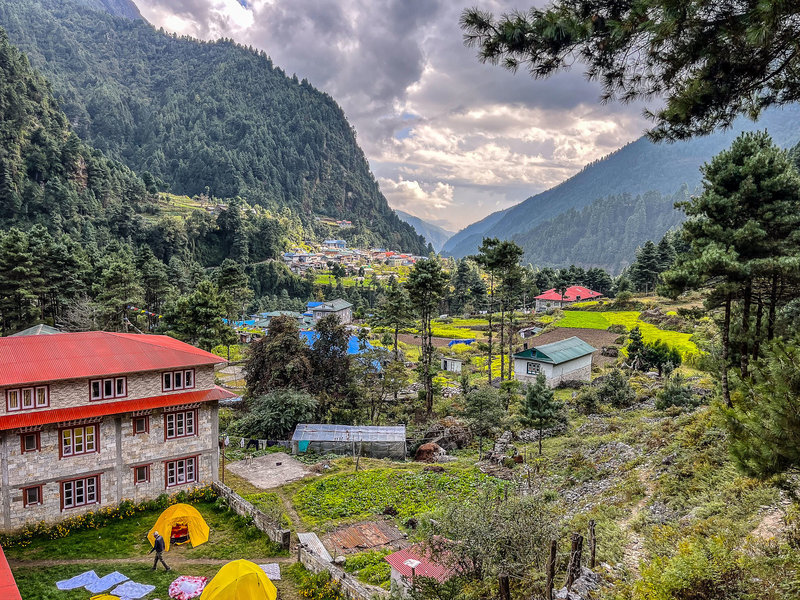
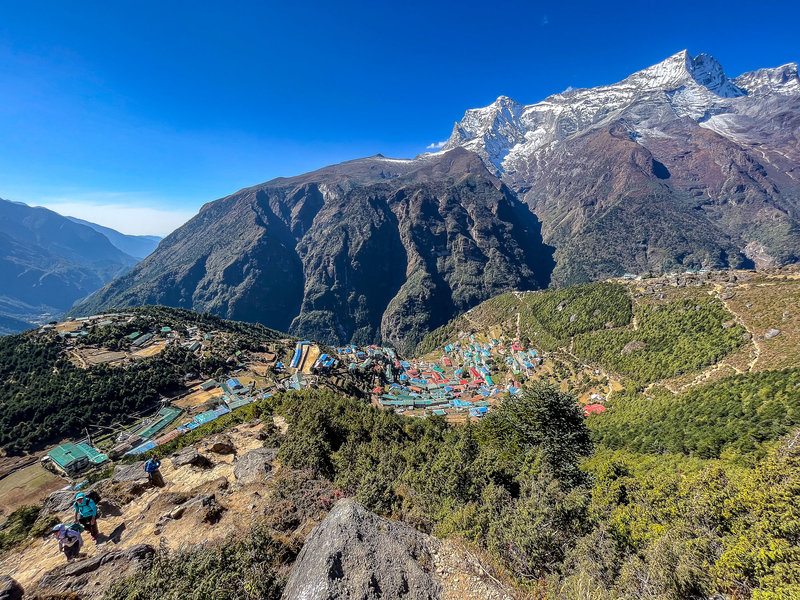
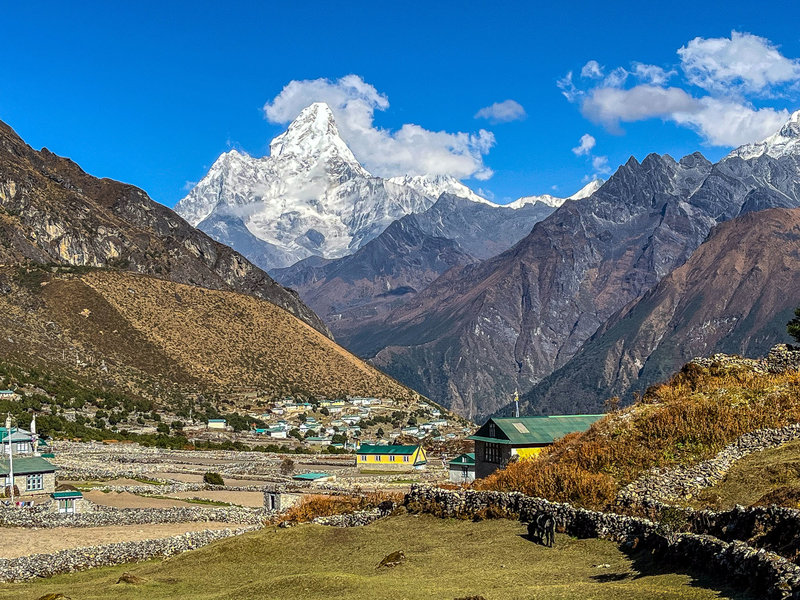
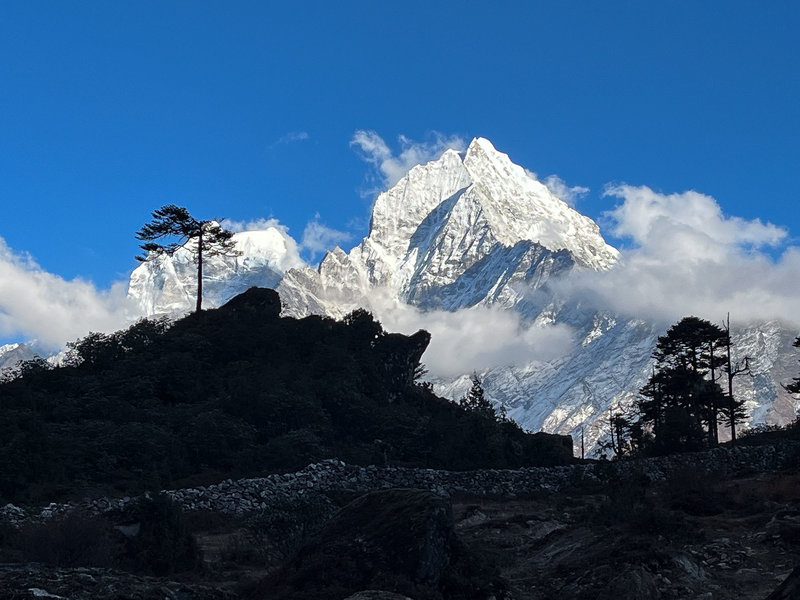
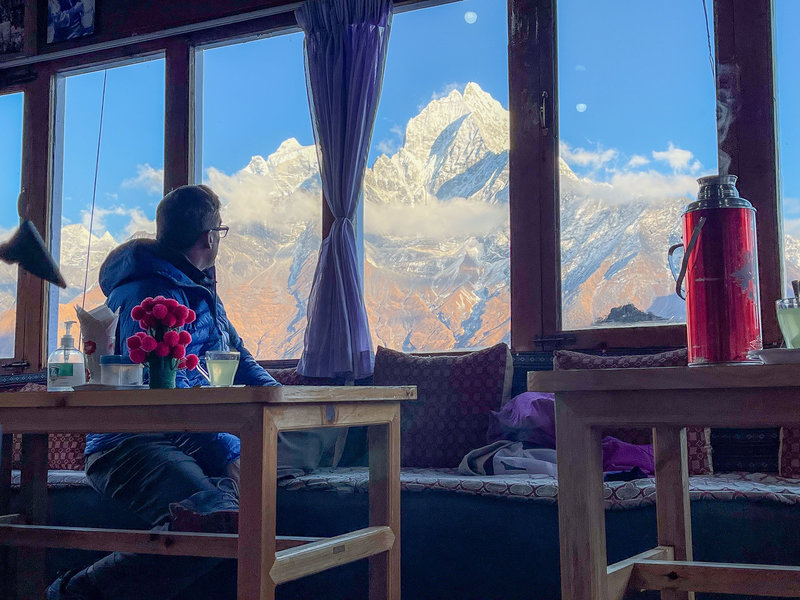
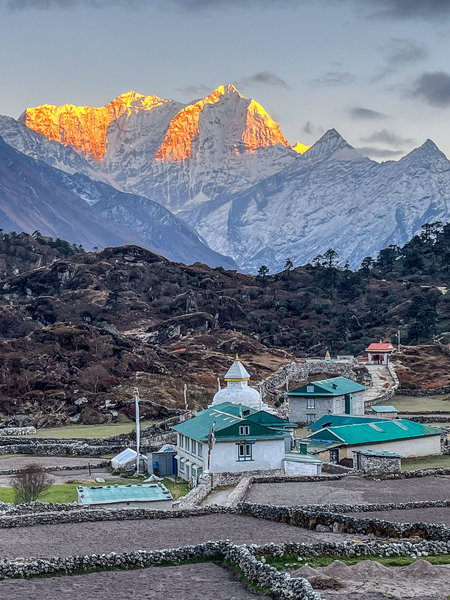
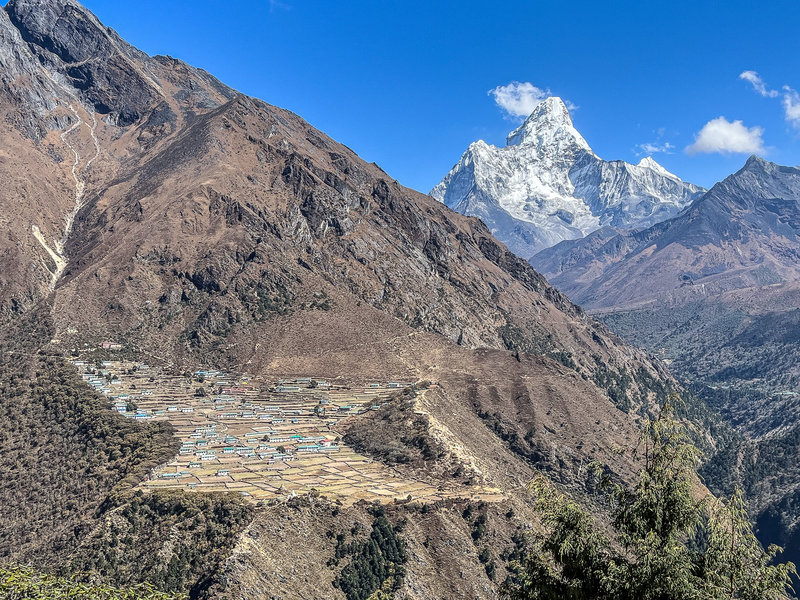
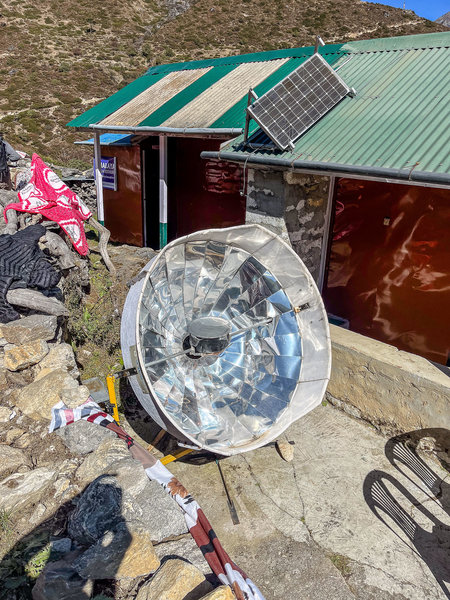
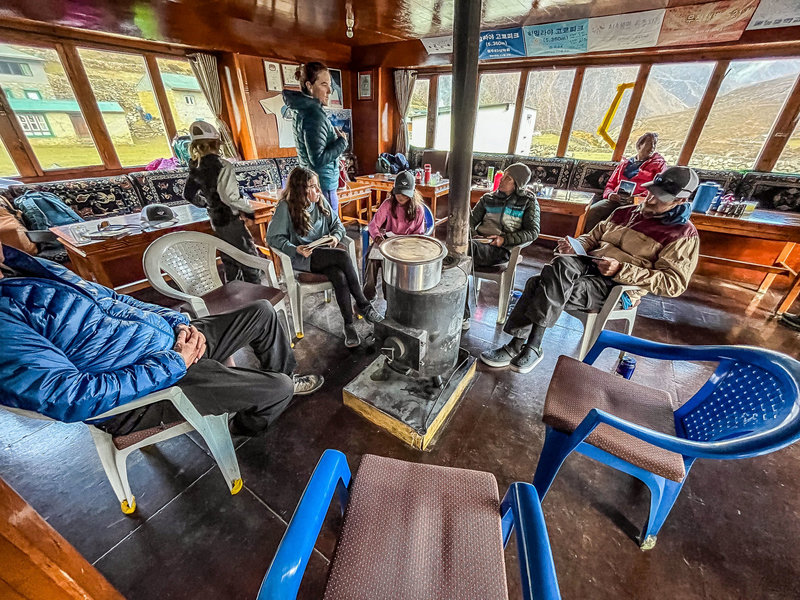
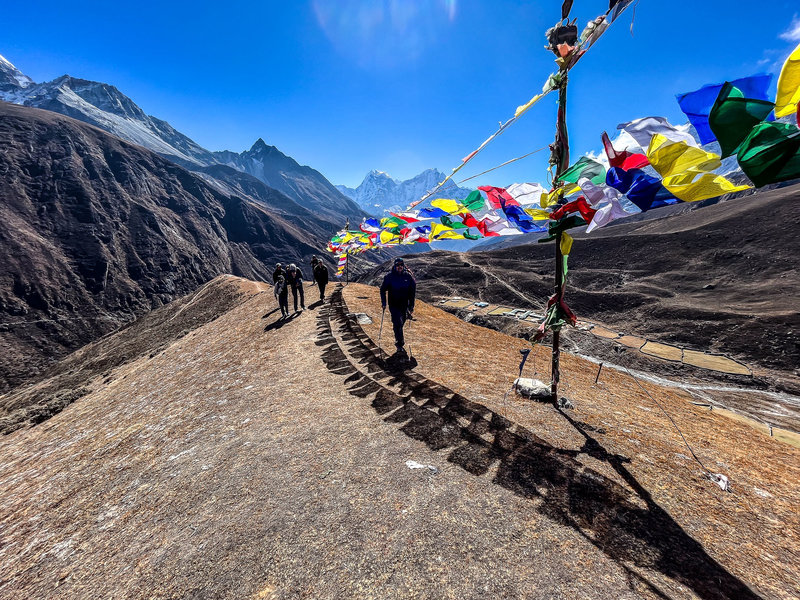
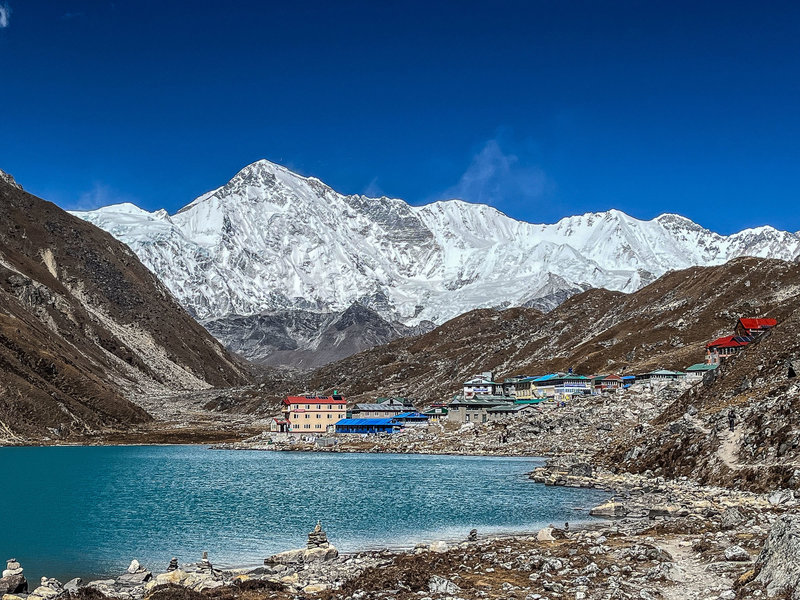
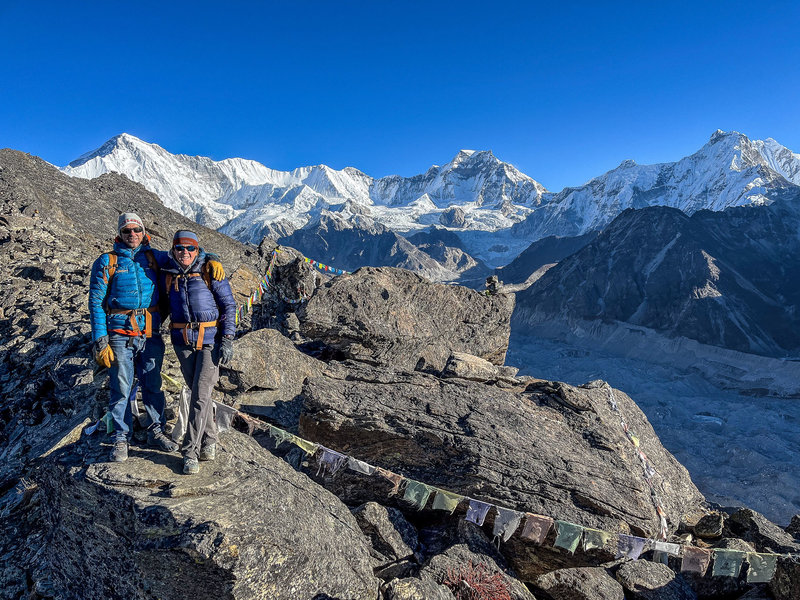
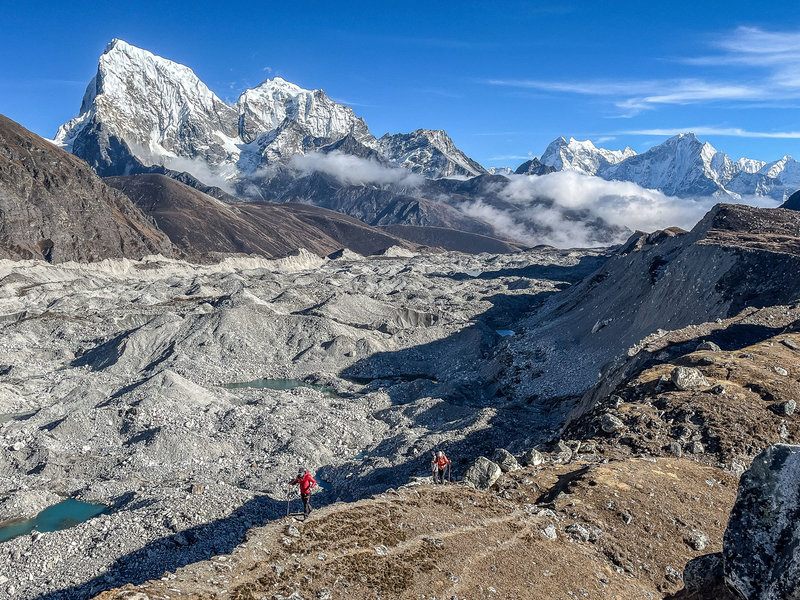
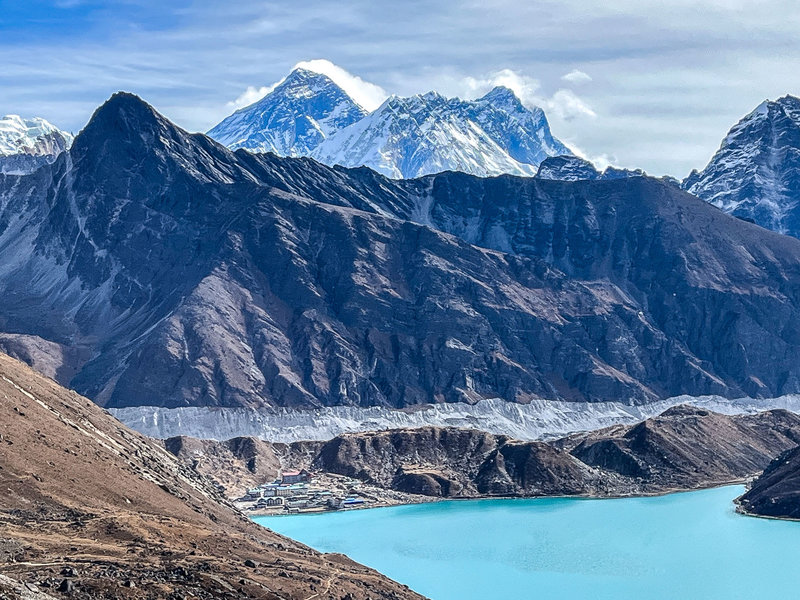
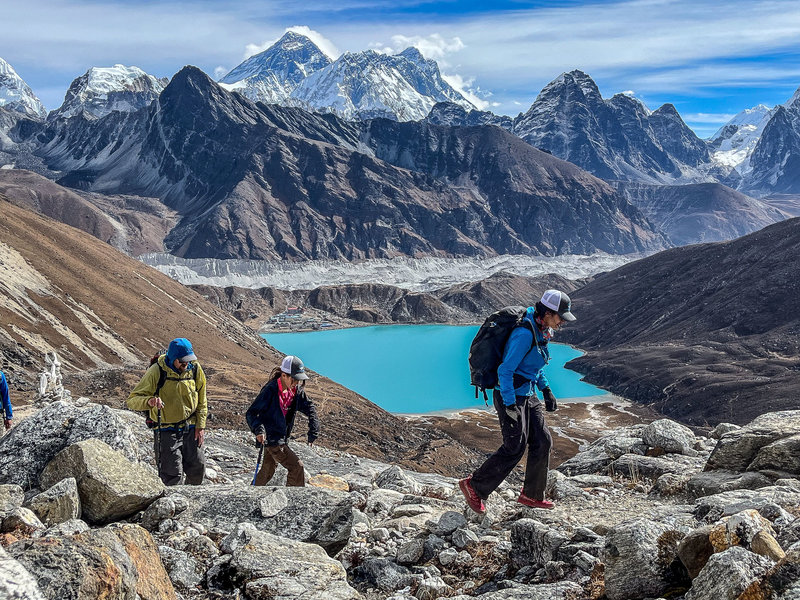
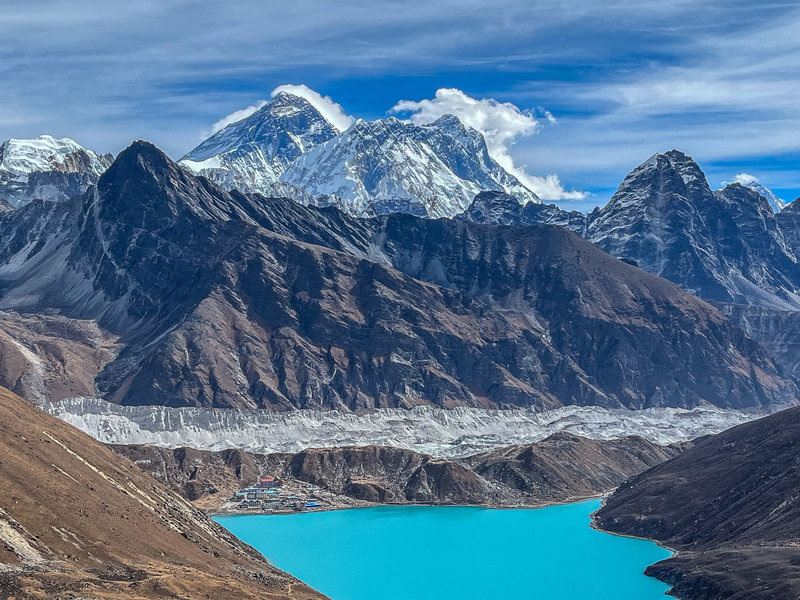
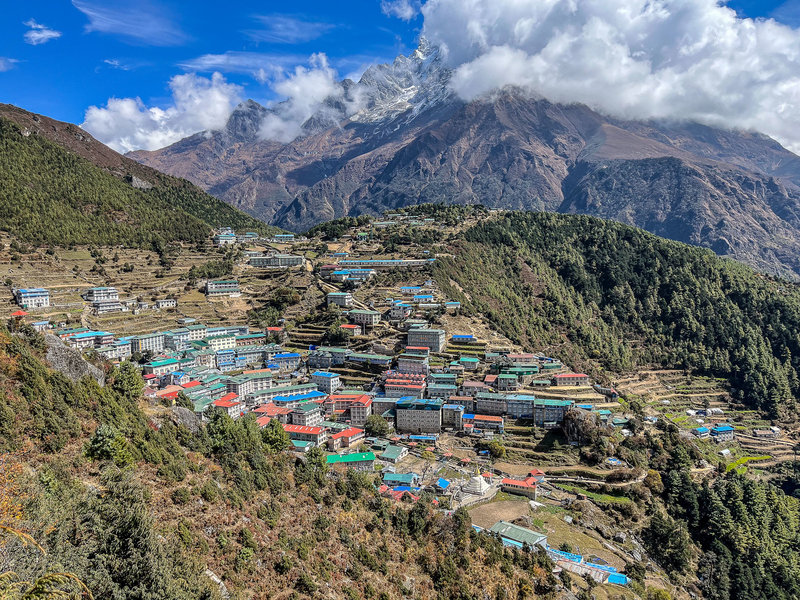
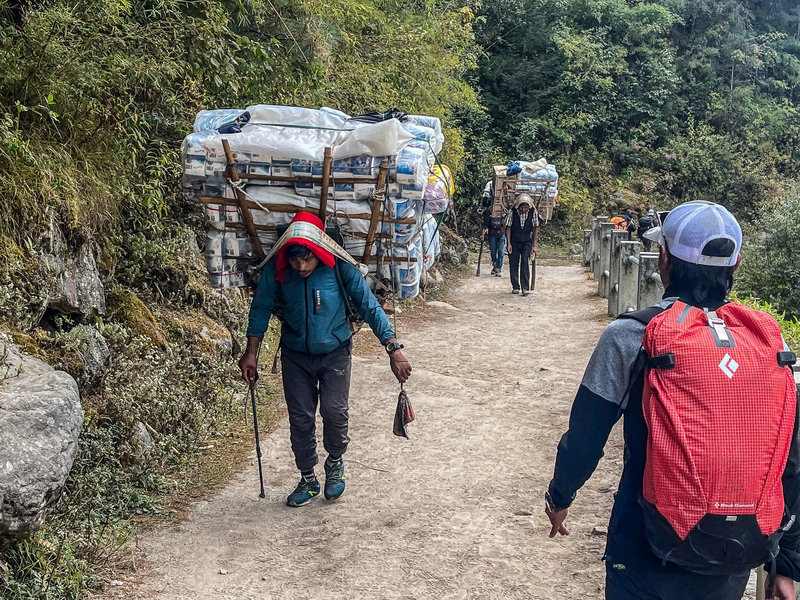
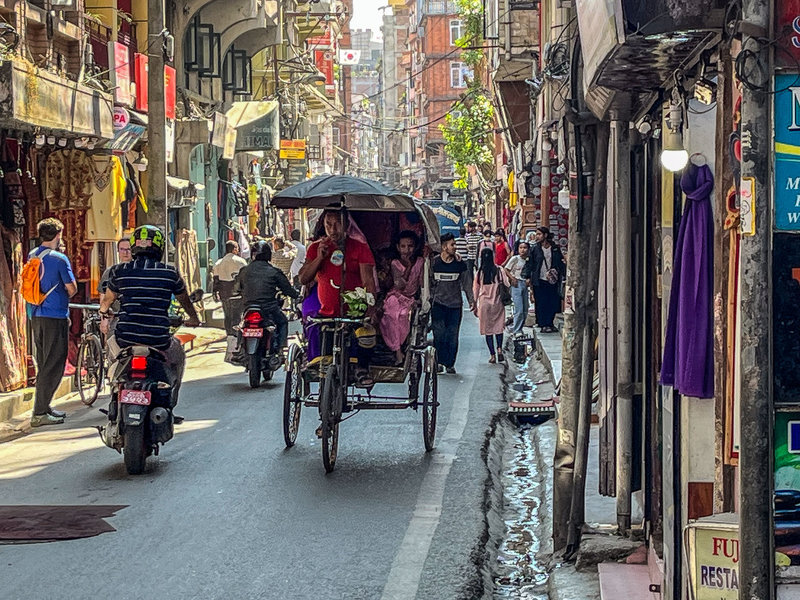
On this trip we will ascend the Gokyo valley and descend the Bhote Koshi valley in a loop from Namche. The journey begins in Lukla where an airport was built in 1964 with Sir Edmund Hillary’s assistance. We trek in via Namche, Khumjung, and Khunde, all famous small villages in the history of Himalayan climbing. We then follow the Dudh Koshi (Milk River) up valley to the small settlement of Gokyo. Previously used for seasonal animal grazing, this region is a pilgrimage site for Hindus and Buddhists, who visit the 5 glacier lakes next to the Ngozumpa Glacier, Nepal’s largest glacier. The rock silt produced by this glacier is what gives the Dudh Koshi its milky color.
Despite the proximity of Everest basecamp, we are opting not to join the thousands that make the trek there in favor of a more pristine trip that actually has better views of Everest. We spend extra time in Gokyo so that we have the option to climb Gokyo Ri (5,357 meters / 17,575 feet) as well as visit the string of 5 sacred lakes above Gokyo, now transformed from a small herding camp to a place that primarily supports trekking groups. This is wild country, made comfortable by simple lodges spread a day’s walk apart.
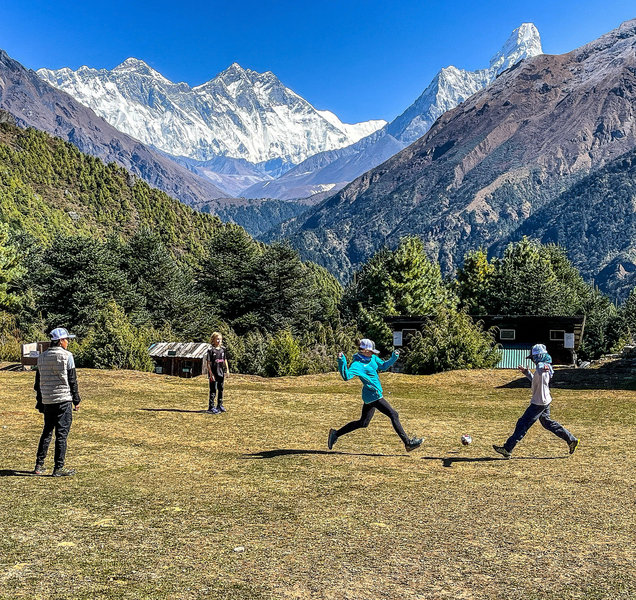
Our high point is Renjo La Pass (5,360 meters / 17, 585 feet). After crossing the pass we descend and follow the Bhote Koshi (River from Tibet) back towards Namche. This is a challenging trek where the small towns and settlements visited along the way retain their authentic character. We have done this trip with our kids, and we think it can be accomplished with other family groups if both the parents and kids have the right mindset and preparation.
Our goal was to run a trip that can be accomplished in just three weeks from home, while experiencing the best of Sherpa hospitality, taking time to properly acclimate, and taking in stunning views of 4 of the worlds 14 8000 meter peaks: Everest, Cho Oyu, Lhotse, and Makalu. We plan to build on our Nepal offerings in subsequent years and suspect that once you take your first trip you might be hooked as we are and want to return to this beautiful country.
Gokyo Trek Itinerary
October 17 - November 6, 2026
Day 1: Depart home country and fly overnight.
Day 2: Arrive in Kathmandu, Nepal (1,400 meters / 4,344 feet) Transfer to hotel. Team dinner either at hotel or in town depending on when people’s flights arrive. Usually a low activity day as people adjust to the time change.
Day 3: Free / preparation day in Kathmandu. Visit Pashupatinath Temple.
Day 4: Helicopter flight to Lukla (2840m/9318’) and walk to Phakding (2,610m/8,563’). This trends slightly downhill and ends at one of our favorite guesthouses. In the afternoon there is a nice hike up to the Pemacholing Monastery.
(8km - 5 miles, 3 hrs; gain 230m, loss 278m)
Day 5: Trek to Namche (3,440m/11,280’) Beautiful hike through a Rhododendron and Magnolia forest with our forest views of Everest along the way. This is the day we enter Sagarmatha National Park.
(11km - 6.8 miles, 5-6 hrs; gain 830m, loss 170m)
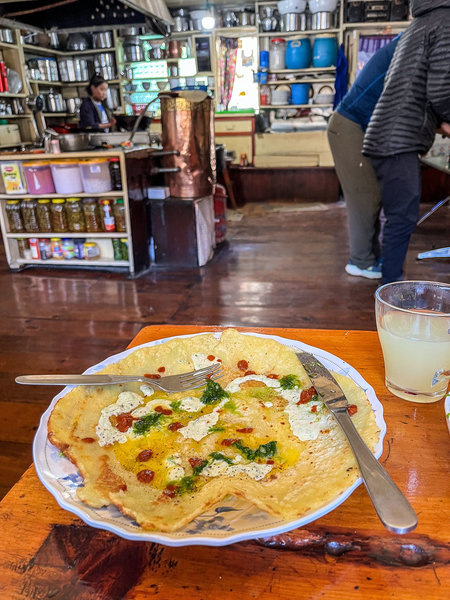
Day 6: Acclimatization day in Namche. Acclimatization hike up to the Tenzing Norgay statue for a spectacular view of Mt. Everest and our first views of Ama Dablam. There is a lot to explore in Namche, including the Sherpa Culture Center and a lunch of Aloo Roti, the traditional Sherpa pancake.
(3.5km - 2.2 miles, 3 hrs; gain/loss 440m)
Day 7: Trek from Namche to Khunde (3840m/12,598’). We usually visit the Everest View Hotel along the way as well as the Khumjung Monastery where you can view the Yeti scalp on display. Night in Khunde with impressive views of Ama Dablam and Thamserku.
(2km - 1.2 miles, 1.5 hrs; gain 400m)
Day 8: Trek to Dole (4,038m/13,245’). As we leave Khumjung we start a high traverse that will lead us into the Gokyo Valley as western to follow the Dudh Koshi river upstream. This is also the day we leave the busier trail that leads to Everest Basecamp.
(12km - 7.5 miles, 6 hrs.; gain 722m / loss 457m)
Day 9: Trek to Machermo (4,470m/14,660’). This is a relatively short hike as we want to take time to let our bodies adjust to the altitude as we make the jump to over 14,000’. By now we are above tree line and the views become very expansive.
(5km, 4-5 hrs; gain 270m)
Day 10: Acclimatization day in Machermo. Lot’s of good acclimatization hikes to do here as we explore up towards the Machermo Glacier. We are giving ourselves time to adjust to altitude in preparation for our move up to Gokyo.
Day 11: Trek to Gokyo (4,750m/15,580’). Spectacular hike as we move through the alpine increasingly surrounded by the big mountains. Climbers in the group will find themselves drooling over the amazing lines popping into view at each turn. We finish in Gokyo with Cho Oyu, 6th highest mountain in the world towering at the head of the valley.
(6km - 3.75 miles, 4-5 hrs; gain 320m)
Day 12: Hike to 5th Lake or take acclimation/rest day. There is so much to do in Gokyo that we take a couple of extra night here. Options include hiking up to the moraine to view Nepal’s largest glacier and the longest glacier in the Himalaya, the Ngozumpa Glacier, climbing Gokyo Ri (5,357 meters / 17,575 feet), and hiking to the 5th lake, visiting each of the 5 lakes above Gokyo. Gokyo Ri is a non-technical, yet strenuous hike with close views of the north side of Everest.
(Hike to 5th Lake 8km - 5 miles, 4 hrs. RT; 300m gain/loss RT)
(Climb of Gokyo Ri 4km - 2.5 miles, 4-5 hrs; 600m gain/loss RT)
Day 13: 2nd day in Gokyo. Night in Gokyo. Hike or rest, your choice.
Day 14: Trek over Renjo La (5,360m/17,585) to Lungden (4,375m/14,350’). We get an early start for the hike up and over Renjo Pass, the high point of our trip. On the descent in the Bhote Koshi Valley we experience the most remote portion of our trek. The mood in Lungden is celebratory after our big day.
(11km - 7.5 miles, 7 hrs.; 790m gain / 1180m loss)
Day 15: Trek to Thame (3,830m/12,560’). Now acclimated, we feel stronger and stronger as we descend into the thicker air on our hike to Thame. Night in Thame.
(10km - 6.2 miles, 4 hrs.; 900 m loss)
Day 16: Trek to Namche: Really nice trek today as we exit the Bhote Koshi Valley and traverse back over to Namche, arriving in time to spend the afternoon exploring anything we missed on our previous visit to Namche on the way in. Night in Namche.
(10km - 6.2 miles, 4-5 hrs.; 710m gain / 1050m loss)
Day 17: Trek to Lukla: On the trip back to Lukla we are moving through familiar terrain, but always enjoy the hike because we can relax a bit with the high altitude behind us and enjoy our exit. Night in Lukla and the final night with our Sherpa crew.
( 19km - 11.8 miles, 7 hrs; 1060m loss / 400m gain)
Day 18: Fly Lukla to Manthali and drive to Kathmandu: Morning flight out from Lukla to the town of Manthali where we then drive to Kathmandu with a stop for lunch along the way. This is a nice opportunity to see lower elevation Nepal and the more rural area outside Kathmandu.
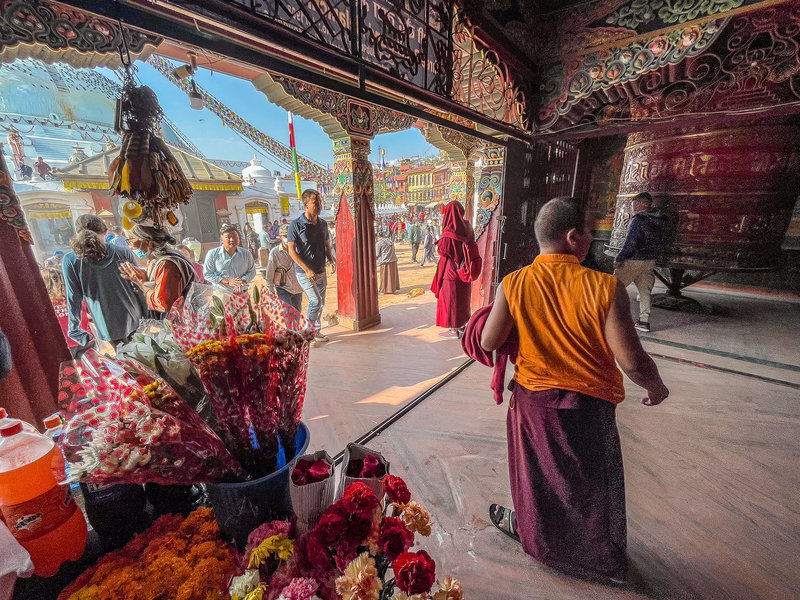
Day 19: Kathmandu day w/ visit to Boudhanath Stupa and final team dinner. This day also serves as a bit of a buffer in the event that we are delayed by weather in getting out of Lukla.
Day 20: Depart Kathmandu by plane.
Day 21: Arrive home
Fitness required for the Gokyo trek
No one day of the trip is overly taxing for people that arrive with good fitness, but the cumulative toll of hiking for 14 consecutive days should be considered. We prepare for these trips by regularly mountain biking, hiking, or running. Each day you will need to carry a light pack (10-12 lbs.) with essentials like extra layers, water, suncream, snack food and a small personal first-aid kit. You can reduce this trip by purchasing lightweight gear, but can also pull it off with things you may already own. Prior to the trip you want to feel comfortable hiking for 6-8 hours. All of the trip will occur at altitudes between 8,500’/2,590M) and 17,585’/5360M). Be sure to show up in good shape. We are happy to help with a training plan or discuss your current fitness and plan if you have concerns.Pre-trip Gokyo Trek training suggestions:
Spend as much time as possible walking up and down hill before the trip. Hiking up and downhill ensures that all the small stabilizer muscles in your hips, knees, ankles, and feet are ready to trek. To maintain aerobic fitness you should bike, nordic ski, or run routinely. We focus year-round on cardiovascular fitness. This plus maintaining strong stabilizer muscles seems the ticket to preventing injury. We are strong proponents of exercising with a hearth rate monitor (i.e. watch) as it lets us know when we are overtraining and helps us monitor recovery.Manage your weight as you prepare for the trip. Eating healthy foods and going easy on things like alcohol are the essential complement to regular exercise. We find that routine exercise tends to nudge us in the direction of a healthy diet.
If you would like a specific training plan, we can direct you to good resources for this.
Why Choose John & Olivia for your Gokyo Trek
We are both IFMGA guides, the highest level of certification available in the world. John has guided full-time for 38 years and Olivia for 26 years, accumulating over 8000 days in the field. Our specialty is high-altitude work. Between us we have 33 Denali 33 trips, and 8 8000 meter peak climbs including 5 trips to Cho Oyu, 2 to Everest, and 1 to Shishapangma. We have a system for acclimatizing that consistently works. We also have a good system for staying healthy in places that have lower sanitary standards. We read voraciously and are very curious and interested in the places that we visit.Gokyo Trek Logistics and Planning
- All trips are professionally outfitted by one of the best local companies and we are good friends with the staff that will accompany us.
- We maintain medical credentials (WFR) that we have maintained for over 30 years and are quite adept at dealing with backcountry medicine. We carry a complete medical kit and advise participants as to what precautions that should be taken before and during the trip.
- We only run trips that we have scouted previously. This gives us a better sense of the expected hazards and a risk management plan to reduce unnecessary risk.
- We carry complete communications equipment including backup power sources ensuring that logistics can be adjusted, or help can be summoned if needed.
- We are always available before the trip to discuss any concerns, equipment, training, etc. as it relates to the trip. We are happy to respond to email or jump on the phone as much as needed as you prepare for your adventure.
- We are generally familiar with the literature of the areas where we operate and are happy to share documentaries, books, and articles that have shaped our understanding of the destination. No trip is complete without a guided visit to our favorite Kathmandu bookstores.
- We feel strongly that all the people we work with should be fairly compensated and work with a reputable compnay. The modern Khumbu economy is heavily dominated by tourism and the income from that is what pays for medical care, education, and opportunity for the inhabitants.
- Most importantly, we are comfortable saying “no” if we encounter a situation that we think puts our group or individuals in our group at risk. Weather changes, people occasionally have challenges acclimating, and we feel very comfortable adjusting the plan as needed to maintain good risk management. Our number one goal is to have a safe trip and our experience in making decisions related to risk management is perhaps the most important thing you can expect from us.
Registration Process
Reach out by phone or e-mail if you are contemplating joining us for the Gokyo trek. We can discuss the suitability of the trip for you or your group, think about travel plans, and answer any questions. The next step is to complete an application and pay a deposit. Once we have a deposit we will send out pre-trip information such as equipment lists, recommended immunizations, details for booking flights to/from Kathmandu, reading lists, etc. We will remain available to answer questions and provide suggestions as you prepare for your trip.Trip Insurance for Gokyo Trek
We highly recommend that participants secure travel insurance. Everyone has different tolerances for financial risk. It is critical that you consider the financial consequences of an unexpected injury or illness during your trip. Travel insurance can generally cover the cost of international emergency care, repatriation, rescue costs, as well as things such as lost luggage, missed flights, etc. When considering trip insurance you should also decide if you would like trip cancellation or interruption insurance. In three decades of running programs we have realized that it is more common than imagined for people to need to cancel their trip for various reasons such as work, family emergencies, or pre-trip injury. Our payment policies are designed to ensure stability for the entire group should one or more members not be able to make the trip and as such are generally non-refundable.Looking for a custom Gokyo Trek
We can easily modify this for your group or family trip. Trip availability will depend on our availability, but we can modify the group size, itinerary, or dates to accomodate your needs. Just give us a call or send an e-mail if you would like to discuss this.
