
Guided Mount Rainier Climb - Muir Route
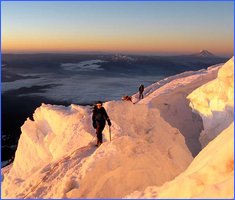
Mountain: Mt Rainier (14,410')
Route: Muir Route via Ingraham or DC
2026 Dates:
- June 7-11, 2026 (FULL)
| Cost: |  |
$3295 per person |
Ready to Sign up?
REGISTER ONLINE NOW
»
Cost Does Not Include
Meals, transportation to/from Mt. Rainier National Park, personal climbing equipment, National Park Climbers Recovery Fee ($82) & Park entrance fee, lodging the night before the climb, if chosen.
Client to Guide Ratio: 2:1
Expedition PDFs
Equipment List »


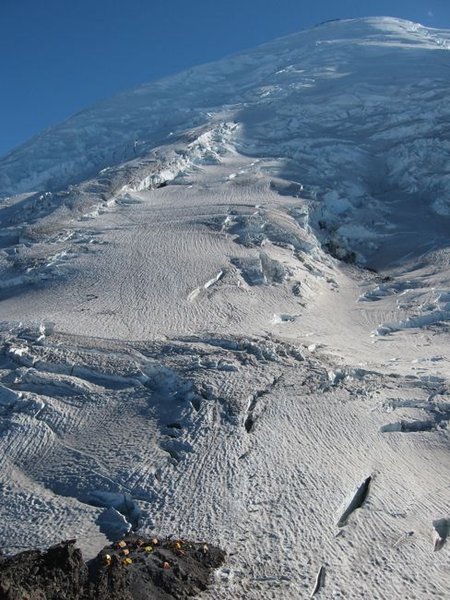
This is an ultra private climb run at a 2:1 ratio with very experienced guides. We also think it gives people the best chance of reaching the summit as we are able to start from a high camp at Ingram Flats, shortening the summit day to just over 3400 feet. We have an extra day built in so you can rest and relax at the flats after the summit, have a nice dinner, and get a good night's sleep before the descent to Paradise the next day.
Historically we ran this as more of a mountaineering seminar, but this year we are looking forward to simply enjoying being on the mountain and focusing deeply on the specific skills that will get you to the top. John Muir visited in the late 19th century and described the meadows on the approach as, "the most luxuriant and the most extravagantly beautiful of all the alpine gardens I ever beheld in all my mountain wanderings." It is simply a stunning place and we are happy that have extra time to enjoy simply being on the mountain.
Don't underestimate the difficulty of climbing Mt. Rainier. It is a real endurance event, but with some advance prep and training in a variety of skills that will help you climb more efficiently it is within reach of fit individuals with a strong desire to make the climb.
Guided Mount Rainier Climb Itinerary
Day 0: Rainier is within easy reach of a morning start from Seattle, Tacoma, or Yakima, but if you really want to enjoy the experience, consider booking a night at the Paradise Lodge and having a relaxed dinner the night before, a good night's sleep, and time to enjoy the sunrise on day 1 before we meet to get packed and ready. We have booked a room and are really excited about staying at this historic lodge where we have so many great memories.Day 1: We will meet at Paradise, WA for an orientation and equipment check. This is where we will pick up our climbing permit. From Paradise (5440’) we will hike to Camp Muir via Pebble Creek and the Muir Snowfield. The ascent to Camp Muir (10.080’) is about 4.5 miles, and usually takes between 5 and 6 hours. Once at Camp Muir we will camp for the night.
Day 2: Today we will wake up at Muir and spend the morning practicing ice axe self arrest, use of crampons, and learn the basics of rope travel. We will then ascend a bit over 1000 feet to Ingraham Flats where we will again camp. The trip to Ingraham Flats requires use of rope and crampons and is excellent training for the summit climb.
Day 3: First possible summit day. One advantage of the way the trip is laid out is that we technically have multiple days when we can make our ascent, so we can choose the one that has the best weather forecast. We are climbing off the busy weekend, giving us the best odds of having the fewest people on the climbing route. The climb to the summit from “the flats” is usually done in four stages. On the first stage we traverse across the Ingraham and get onto Disappointment Cleaver, which we then follow up to a nice flat spot and our first break. On the second stage we climb either the Ingraham or upper Emmons glacier to a break at about 13,200 feet. On the third stage we climb to the crater rim, where we can drop our packs for the last leg. On the 4th leg we cross the snow filled crater to Columbia Crest, the summit of Mt. Rainier. On the descent we usually take breaks back at the crater rim and the top of the Cleaver. Our goal is to get up and down before things get too warm and the glacier softens, but since we have another night at the camp at the flats, we are not in a huge hurry.
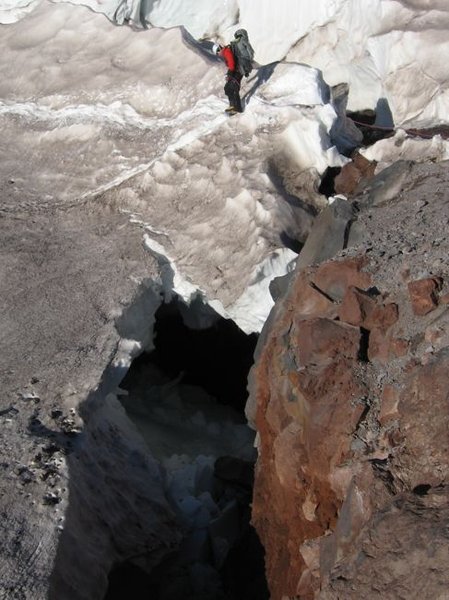
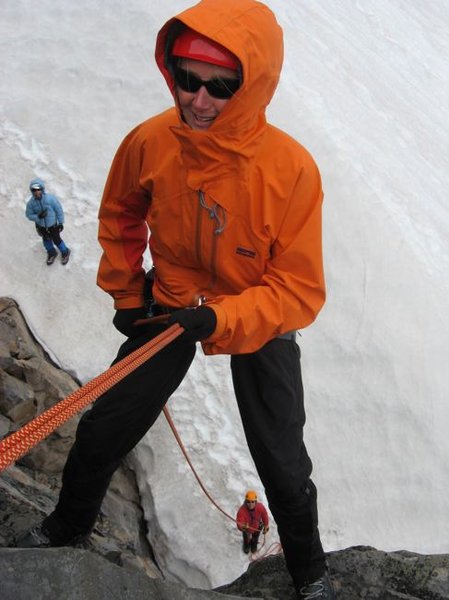
Day 4: If we accomplished our summit on Day 3, this day can be used to do some fun climbing by top rope in the crevasses up near Ingraham Flats. We will then descend to Camp Muir for one last night or all the way to Paradise, as the group decides. This is also our alternate summit day if the weather was not what we were looking for on day 3.
Day 5: Contingency day in the event that we are forced to climb on day 4 if the weather does not cooperate on day 3. We should be back at Paradise in time for lunch.
Qualifications for Climbing Mt. Rainier
You need no previous climbing experience to do this climb, but you do need to be in very good condition and must be able to carry a backpack weighing as much as 40 lbs. We will help you choose the right gear, but there is a real art to packing light and if you don’t, your pack will weigh considerably more. People very often underestimate the difficulties required to climb Mt. Rainier. In the words of a sage mountain guide, "You cannot overtrain for a climb of Mt. Rainier." Please contact the office for advice on training or to discuss the difficulties of the trip before committing to your spot.Logistics
If coming from outside of the Pacific Northwest you will want to fly into Seattle-Tacoma International Airport and rent a car to get to Paradise, WA, meeting point for our climb of Mt. Rainier. If you need to rent an ice axe, crampons, plastic boots, etc. you should contact Feathered Friends in Seattle (888-308-9365) to reserve any items that you need for the climb. You will want to arrive on the day before your climb starts and depart the day after your climb ends. Additional details will be mailed to you upon reserving your spot on this trip.Training to Climb Mt. Rainier
Those that consistently succeed seem to have a good basic level of fitness and above all have the ability to keep moving uphill at about 1000' feet per hour for 7 to 8 consecutive hours. Your best training is going to be walking uphill with weight on your back. This can be accomplished by backpacking, AT skiing, or other mountaineering programs. If you do not live near hills or mountains, then we suggest a mixture of running, swimming, and biking all with an emphasis on going for several hours at a time. A guided climb of Mt. Rainier takes much of the pressure off with regards to decisions about route-finding, weather conditions, and other details related to the climb, but it does not lower the bar for the fitness required to make it safely up and down Rainier. Be sure to contact us directly before your climb for full details on training for your Rainier climb.Equipment for the climb
You will get a detailed equipment list once registered for the climb. We provide all the group gear such as tents, stoves, climbing ropes, snow anchors, & communications equipment. We can provide harnesses and helmets for each climber. For personal items such as climbing boots, clothing, ice axes, crampons, sleeping bags, sleeping pads and backpacks you can either bring your own, purchase new, or rent just about anything you need from a well-stocked operation called Whittaker Mountaineering in Ashford. We will send you complete details as part of the pre-trip information.Lodging
It is certainly possible to drive in from Seattle on the first day of the climb. For a more relaxed experience we recommend booking at night at the Paradise Inn if there is still availability. On the final day of our climb, we will be down early enough to make the transfer out of the area. We can assist with lodging recommendations in the nearby area.Alternatives to climbing Mt. Rainier
Guided climbs of Mt. Rainier are tightly regulated by the National Park Service and tend to fill very quickly. The 3 major concessions split 3600 spaces per year. 15 non-concession companies each get 4-6 spaces per year (60-90 spaces total). The reality is that if you can not get on with a concession you need to be very lucky to get one of the other companies 4-6 spaces. Many people are not aware of the other great mountains to be climbed in the Pacific Northwest. While there are no other peaks over 14,000 in the State of Washington, there are dozens of peaks ranging from 8000' to 12,276' that offer physical climbing challenges equal to Mt. Rainier and generally greater than one of the Colorado 14'ers. What makes these lower peaks so special is that they generally have much lower trailheads, a steeper overall climb, and heavy glaciation, making them the ideal training ground for big mountains outside the US or in Alaska, or extraordinary outings in themselves. All of these peaks are much less crowded than Mt. Rainier. The following list should give you an idea of the possibilities. Feel free to call us at 509-548-5823 to discuss alternate climbs if you preferred Mt. Rainier date is unavailable.
